2026 Trial Plan Will Test TMS Timed to Brain Rhythms
A 2026 study protocol outlines a test of a different kind of TMS personalization: timing pulses to a person's ongoing brain rhythms. The BOSSFRONT2 paper, published January 21 in European Archives of Psychiatry and Clinical Neuroscience, describes a planned pilot trial comparing EEG-triggered stimulation with standard intermittent theta-burst stimulation for major depression.
The distinction between a protocol and a result is important. This publication explains what researchers intend to test and how they plan to test it. It does not establish that rhythm-synchronized TMS is more effective, safer, or ready to replace standard treatment.
From choosing a location to choosing a moment
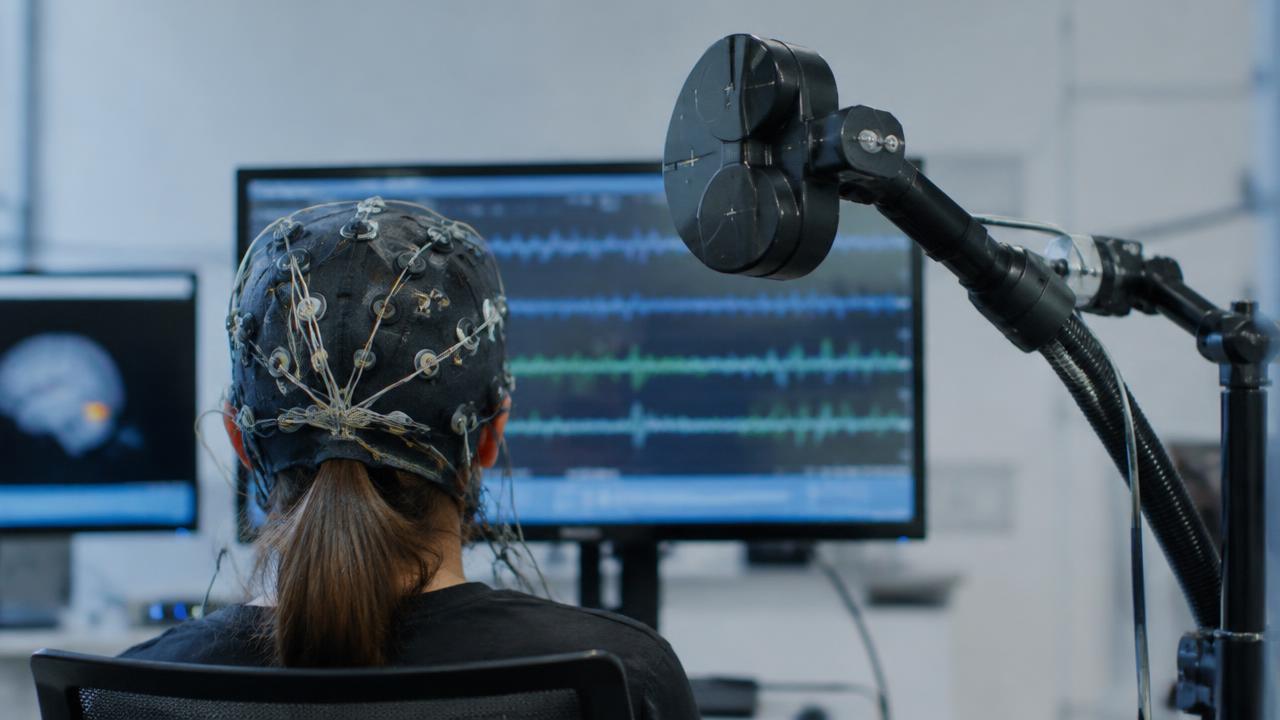
Many discussions of TMS precision concern where a coil should stimulate. BOSSFRONT2 asks an additional question: when should a pulse arrive relative to the brain's ongoing activity? The experimental system uses electroencephalography, or EEG, to detect a selected rhythm and trigger stimulation in relation to it.
EEG measures electrical activity from electrodes on the scalp. In this trial, the experimental approach is designed around endogenous theta oscillations over the left dorsomedial prefrontal cortex. The hypothesis is that coordinating stimulation with those oscillations could influence treatment effects.
What the pilot plans to compare
The protocol describes a randomized, double-blind, standard-treatment-controlled pilot involving 28 people with major depressive disorder. Participants are to be assigned in a 1:1 ratio to the experimental or comparison condition.
The experimental condition uses brain-oscillation-synchronized TMS over the left dorsomedial prefrontal cortex. The comparison condition uses a standard intermittent theta-burst protocol over the left dorsolateral prefrontal cortex. Treatment is planned over four consecutive weeks, totaling 20 sessions.
Why the control condition matters
Comparing the experimental approach with an established active treatment asks a clinically relevant question: how does the new treatment package perform against a commonly used alternative? That differs from comparing it only with sham stimulation.
However, the conditions differ in both timing strategy and brain target. If outcomes eventually differ, the trial will not isolate pulse synchronization as the sole explanation. The finding would concern the experimental package as tested, including its anatomical target and stimulation approach.
What a small pilot can contribute
A 28-person study can provide preliminary information and help researchers plan larger work. But its size limits the precision of estimates and the conclusions that can be drawn about uncommon adverse events or differences among patient subgroups.
The most useful reading of future results will include the size of any observed difference, uncertainty around that estimate, completion rates, and how convincingly blinding was maintained. A favorable average score alone would not settle whether the approach should be widely adopted.
What remains hypothetical
The phrase brain-rhythm synchronization can sound like a confirmed way to optimize every pulse. At this stage, the clinical advantage is the question under investigation. Measuring a rhythm and delivering a pulse at a selected time does not itself prove a better antidepressant outcome.
Nor should readers assume that this method is interchangeable with other forms of personalized TMS. EEG-based timing, imaging-based targeting, and changes in treatment frequency address different aspects of stimulation. Evidence for one approach cannot automatically validate another.
Questions to ask when results appear
- Did the experimental group improve more than the active comparison group?
- How large and clinically meaningful was any difference?
- How consistent were treatment delivery and EEG triggering?
- Did benefits persist after the treatment course?
- What limitations follow from changing both target and timing?
Why publish the plan first?
A protocol gives readers a record of the intended design before interpreting outcomes. It identifies the treatment conditions, planned population, and research question. That makes it easier to distinguish planned analyses from later exploratory findings and to understand what the eventual results can legitimately answer.
For patients, the immediate implication is informational rather than prescriptive. The publication shows an active effort to investigate timing as a treatment variable. It does not provide a reason to switch from an established care plan or to assume that a clinic using the word synchronized is offering this exact research method.
The bottom line
BOSSFRONT2 is a clearly defined test of a plausible idea, not an announcement of proven superiority. Its importance lies in asking whether real-time brain activity can help shape TMS delivery—and in making the study design available before the clinical answer is known.
Sources
Frequently Asked Questions
- What is EEG-triggered TMS?
- It uses electrical brain-activity measurements to time stimulation pulses to a selected phase of an ongoing brain rhythm.
- How many participants are planned?
- The BOSSFRONT2 protocol describes a pilot trial of 28 people with major depressive disorder.
- Has this publication shown that synchronized TMS is better?
- No. The January 2026 publication describes the planned study and methods, not a completed efficacy result.
Written by
TMS News Editorial Team
The TMS News editorial team covers transcranial magnetic stimulation research, treatment access, and patient education, drawing on peer-reviewed studies and leading clinical centers.
 PreviousMeasuring TMS Progress: Why Response and Remission Are Different
 NextMotor Threshold in TMS: A Calibration Measure, Not a Depression Score