
Accelerated TMS Protocols Are Cutting Depression Treatment Time
One of the biggest practical barriers to TMS has always been the time commitment: a standard course means coming to a clinic five days a week for about six weeks. A wave of new research is changing that equation.
What is accelerated TMS?
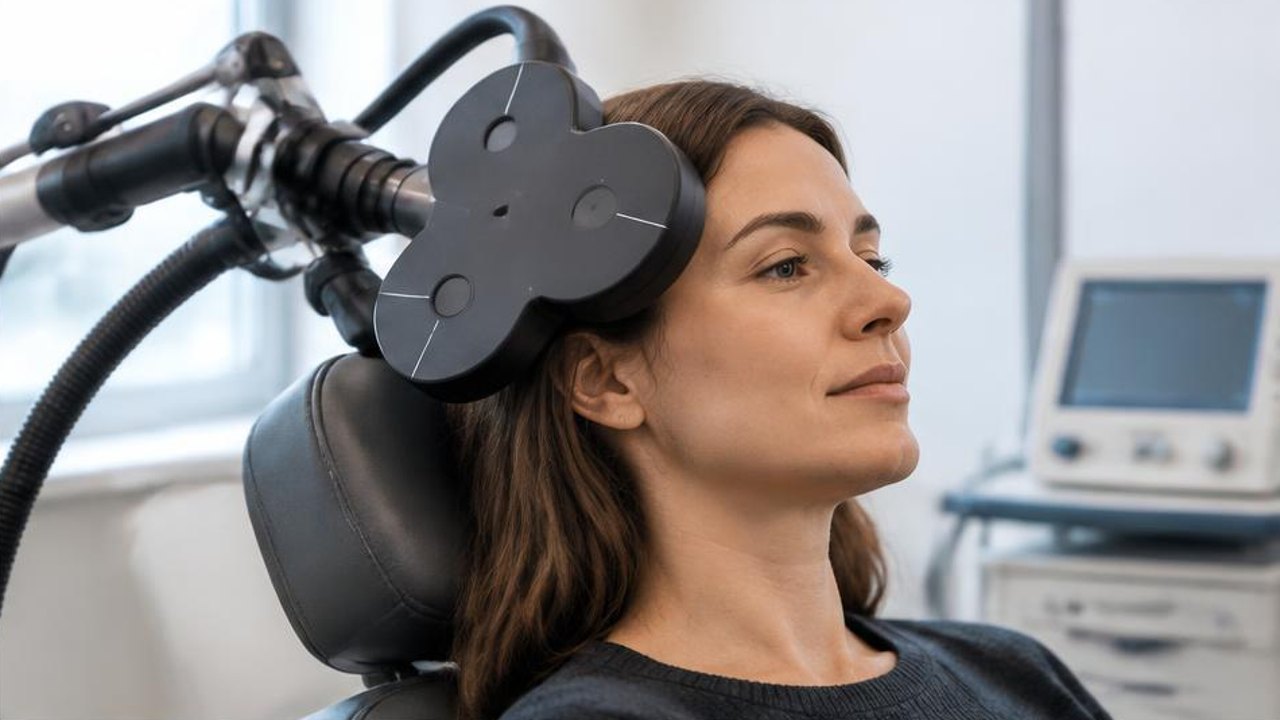
Accelerated protocols deliver several short sessions per day instead of one, using a rapid form of stimulation called intermittent theta burst stimulation (iTBS) that takes only a few minutes per session. UT Southwestern Medical Center recently described its "Triple TBS" approach — three brief theta burst treatments per visit, separated by carefully timed intervals — which allows a full course in about three weeks instead of six.
What the trials show
A multisite randomized trial of accelerated H1-coil TMS, published in Brain Stimulation in 2026, found the accelerated schedule performed no worse than the standard once-daily course for major depression. A companion analysis of patient-reported outcomes reached a similar conclusion from the patient's perspective. Earlier, a 2025 trial of a "5×5" accelerated protocol — five sessions a day for five days — found comparable symptom improvement to conventional daily rTMS.
Why it matters
Shorter courses could make TMS realistic for people who cannot take six weeks of daily appointments — including those with demanding jobs, caregiving responsibilities, or long drives to the nearest clinic. Researchers caution that accelerated schedules are still being refined, and not every clinic offers them yet.
Sources
- UT Southwestern Medical Center: A "game changer" for severe depression that cuts treatment time
- Brain Stimulation (2026): Accelerated TMS with the H1-coil — multisite randomized non-inferiority trial
- PubMed: Patient-reported outcomes following accelerated vs. standard TMS (2026)
- PubMed: Efficacy of 5×5 accelerated versus conventional rTMS (2025)
Written by
TMS News Editorial Team
The TMS News editorial team covers transcranial magnetic stimulation research, treatment access, and patient education, drawing on peer-reviewed studies and leading clinical centers.
 PreviousMeasuring TMS Progress: Why Response and Remission Are Different
 NextMotor Threshold in TMS: A Calibration Measure, Not a Depression Score