
Can Early TMS Improvement Predict the Final Outcome?
TMS evidence is most useful when the question, measurement and study population are clear. Here is a closer look at early TMS improvement and the limits that matter when translating research into a clinical conversation.
Prediction is not certainty
Two 2022 studies linked early symptom change with later TMS outcomes. Mirman and colleagues studied 329 completers of a six-week course. Limited early mood improvement was associated with later nonresponse in participants with severe or very severe initial depression. It was tied to defined symptoms and severity, not simply whether someone felt better immediately.
Comparing another study
Spitz and colleagues retrospectively examined 105 people receiving conventional 10 Hz rTMS or intermittent theta burst stimulation. Their work investigated early improvement across both groups. These designs generate useful hypotheses, but completer selection and a relatively small retrospective sample restrict generalization to everyone starting treatment.
What a prediction statistic means
Negative predictive value is how often predicted nonresponse is correct in the studied population. It depends partly on how common nonresponse is there. Changing questionnaire, timing or threshold changes classification. It is not an unchanging biological rule. Validation in other settings is needed before treating a result as broadly reliable.
A predictor is not a stopping rule
Forecasting outcome does not prove that acting on the forecast improves care. These papers do not establish a universal prospectively validated stopping rule. Ask how a prediction was developed and whether your situation resembles the study population. Early ratings can support discussion without becoming a verdict. No early improvement does not guarantee failure, and these findings are not instructions to stop, continue or adjust treatment independently.
This article is informational, not an individualized treatment recommendation. A qualified clinician can interpret the evidence alongside your diagnosis, history and existing care. Do not alter prescribed treatment based on a study summary.
Sources
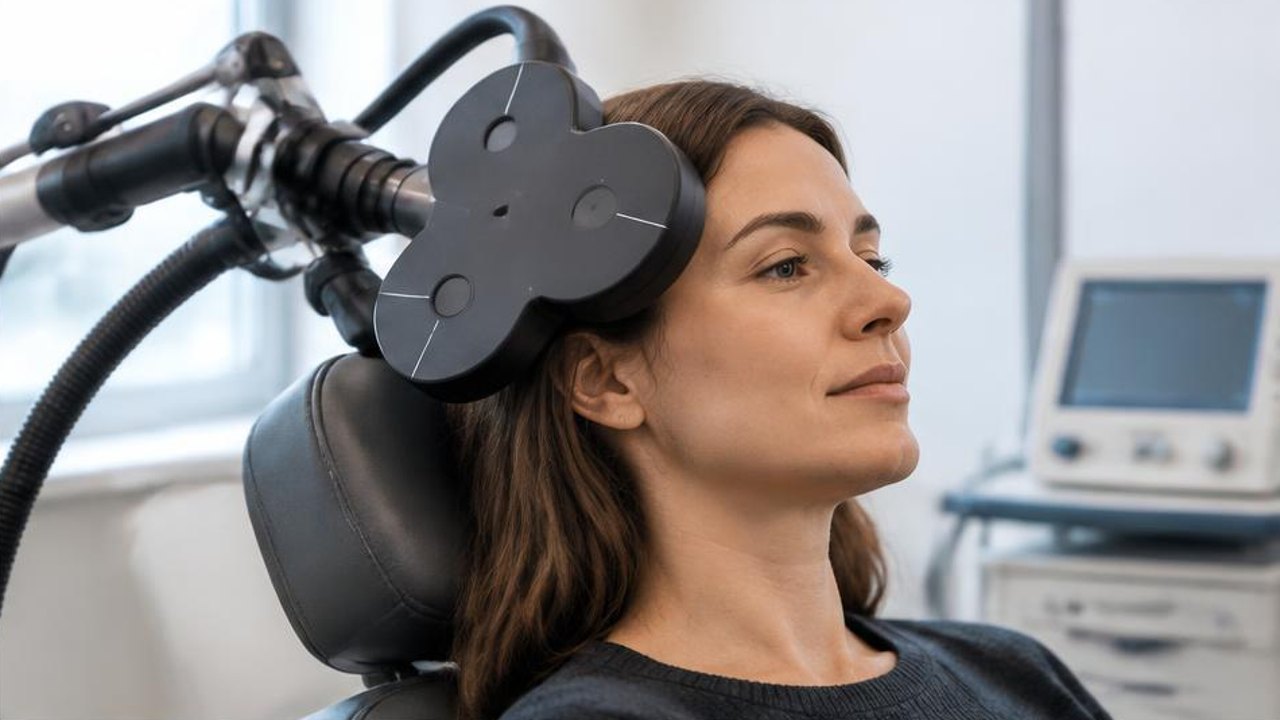
This article is for general information, not individual medical advice. Illustration is AI-generated and does not depict actual study participants.
Frequently Asked Questions
- Prediction is not certainty?
- Two 2022 studies linked early symptom change with later TMS outcomes. Mirman and colleagues studied 329 completers of a six-week course. Limited early mood improvement was associated with later nonresponse in participants with severe or very severe initial depression. It was tied to defined symptoms and severity, not simply whether someone felt better immediately.
- What is the main evidence limitation?
- Negative predictive value is how often predicted nonresponse is correct in the studied population. It depends partly on how common nonresponse is there. Changing questionnaire, timing or threshold changes classification. It is not an unchanging biological rule. Validation in other settings is needed before treating a result as broadly reliable.
- What should readers take away?
- Forecasting outcome does not prove that acting on the forecast improves care. These papers do not establish a universal prospectively validated stopping rule. Ask how a prediction was developed and whether your situation resembles the study population. Early ratings can support discussion without becoming a verdict. No early improvement does not guarantee failure, and these findings are not instructions to stop, continue or adjust treatment independently.
Written by
TMS News Editorial Team
The TMS News editorial team covers transcranial magnetic stimulation research, treatment access, and patient education, drawing on peer-reviewed studies and leading clinical centers.
 PreviousMeasuring TMS Progress: Why Response and Remission Are Different
 NextMotor Threshold in TMS: A Calibration Measure, Not a Depression Score