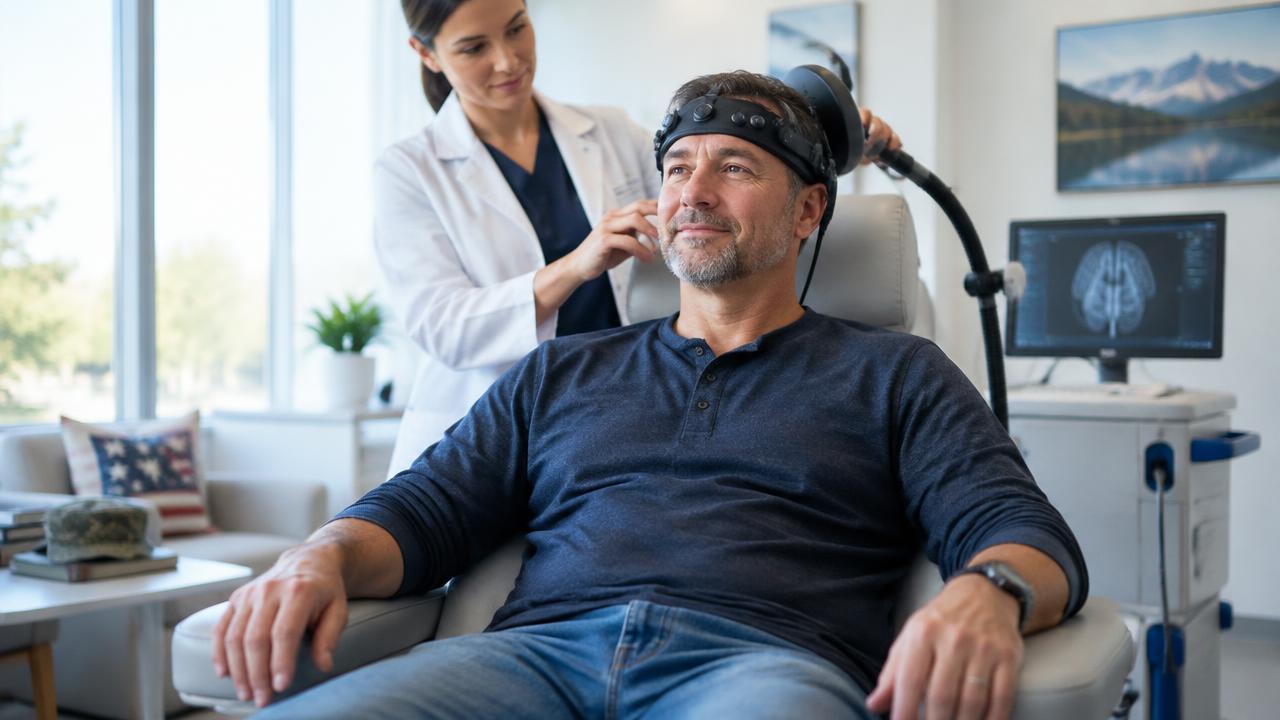
New Magnetic Therapy for PTSD Reports 68% Remission in Clinical Trial
A personalized form of magnetic brain stimulation has produced striking early results for post-traumatic stress disorder: in a clinical trial of Magnetic e-Resonance Therapy (MeRT), 68% of participants no longer met the diagnostic criteria for PTSD after treatment, with an average 52% reduction in symptoms, according to reporting by USA TODAY on the trial sponsored by Wave Neuroscience.
What is MeRT?
MeRT is a customized offshoot of transcranial magnetic stimulation. Instead of using the same target and settings for everyone, clinicians use each patient's EEG — a recording of the brain's electrical activity — to tailor the stimulation frequency and placement to that individual's brain rhythms.
Why PTSD needs new options
PTSD affects millions of Americans, including a large share of military veterans. Standard treatments — trauma-focused therapy and certain medications — help many people, but a substantial portion continue to have disabling symptoms. That gap has made PTSD one of the most active areas of brain-stimulation research.
How this fits with other research
The MeRT results arrive alongside other encouraging PTSD findings. A UT Health San Antonio study of 119 active-duty service members and veterans in a residential program found that adding magnetic stimulation to prolonged exposure therapy significantly reduced combat PTSD symptoms compared with therapy alone. Separately, researchers are testing MRI-guided TMS that targets the part of the cortex most strongly connected to the amygdala — the brain's fear center — in each individual patient.
Important caveats
MeRT is not FDA-cleared for PTSD, and experts caution that early trial results need replication in larger, independently run studies before the approach becomes standard care. Still, the convergence of positive results across multiple research groups makes PTSD one of the most closely watched frontiers in magnetic stimulation.
Sources
Written by
TMS News Editorial Team
The TMS News editorial team covers transcranial magnetic stimulation research, treatment access, and patient education, drawing on peer-reviewed studies and leading clinical centers.
 PreviousMeasuring TMS Progress: Why Response and Remission Are Different
 NextMotor Threshold in TMS: A Calibration Measure, Not a Depression Score