
Older Adults in TMS Research: Reading the FOUR-D Trial Carefully
TMS evidence is most useful when the question, measurement and study population are clear. Here is a closer look at TMS in older adults and the limits that matter when translating research into a clinical conversation.
Older adults deserve direct evidence
FOUR-D, published in 2022, compared standard sequential bilateral rTMS with bilateral theta burst stimulation in older adults with depression. Rather than extrapolating solely from younger populations, it placed an older group at the center of the research question. Age-specific evidence can inform relevance without making age the whole clinical story.
What noninferiority means
The trial concluded that bilateral theta burst stimulation was noninferior for its primary depression outcome. Researchers tested whether it performed acceptably close to a comparator within a predefined margin. This is not proof that the interventions are identical or that either outperforms every alternative. The margin, outcome and uncertainty are central to interpretation.
An active comparison has boundaries
FOUR-D compared active interventions without a sham group. It primarily informs their relative performance under the study conditions, rather than independently measuring an inactive-control advantage. Eligibility and participant characteristics also limit generalization. Depression outcomes cannot become claims of dementia prevention or brain rejuvenation, which require entirely different studies.
The practical research message
Older people have been directly studied in randomized TMS research; it does not follow that one protocol suits everyone. Ask how the trial population and endpoints fit your own clinical questions. Consider symptoms alongside function and care needs. Device novelty or faster delivery does not answer every question of benefit, access or suitability. Clinical interpretation still requires the exact protocol and personal circumstances.
This article is informational, not an individualized treatment recommendation. A qualified clinician can interpret the evidence alongside your diagnosis, history and existing care. Do not alter prescribed treatment based on a study summary.
Sources
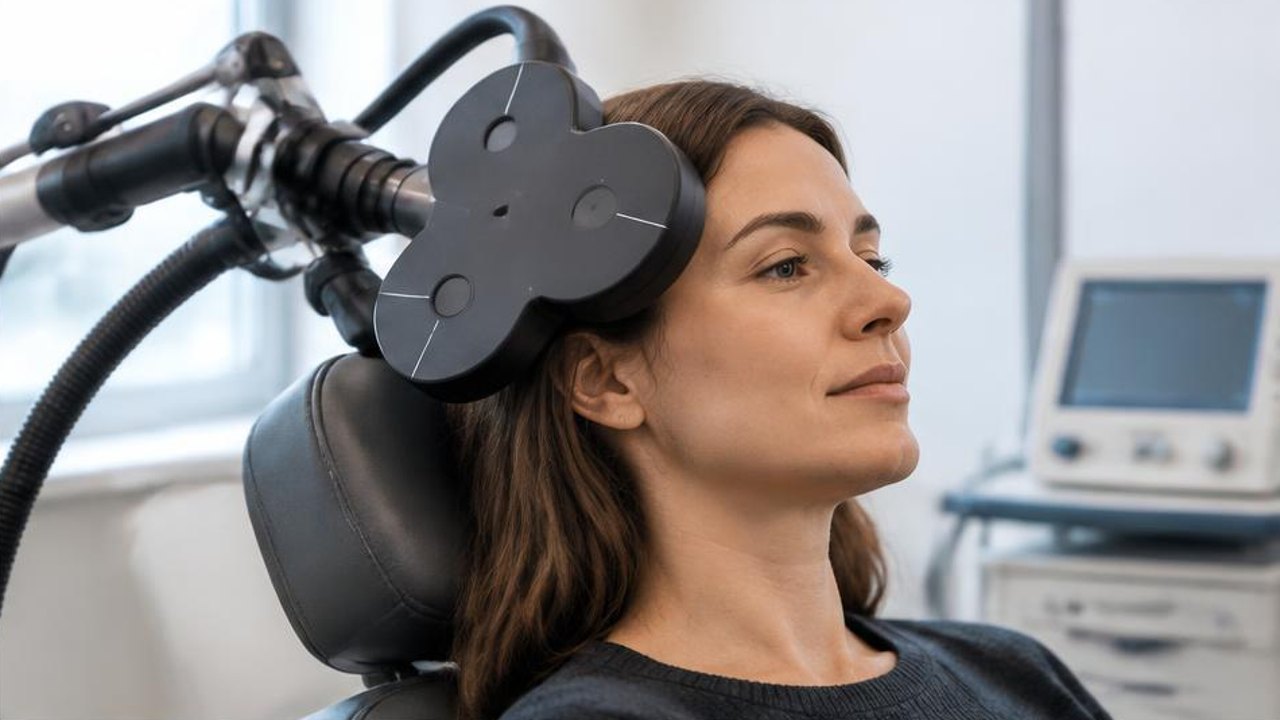
This article is for general information, not individual medical advice. Illustration is AI-generated and does not depict actual study participants.
Frequently Asked Questions
- Older adults deserve direct evidence?
- FOUR-D, published in 2022, compared standard sequential bilateral rTMS with bilateral theta burst stimulation in older adults with depression. Rather than extrapolating solely from younger populations, it placed an older group at the center of the research question. Age-specific evidence can inform relevance without making age the whole clinical story.
- What is the main evidence limitation?
- FOUR-D compared active interventions without a sham group. It primarily informs their relative performance under the study conditions, rather than independently measuring an inactive-control advantage. Eligibility and participant characteristics also limit generalization. Depression outcomes cannot become claims of dementia prevention or brain rejuvenation, which require entirely different studies.
- What should readers take away?
- Older people have been directly studied in randomized TMS research; it does not follow that one protocol suits everyone. Ask how the trial population and endpoints fit your own clinical questions. Consider symptoms alongside function and care needs. Device novelty or faster delivery does not answer every question of benefit, access or suitability. Clinical interpretation still requires the exact protocol and personal circumstances.
Written by
TMS News Editorial Team
The TMS News editorial team covers transcranial magnetic stimulation research, treatment access, and patient education, drawing on peer-reviewed studies and leading clinical centers.
 PreviousMeasuring TMS Progress: Why Response and Remission Are Different
 NextMotor Threshold in TMS: A Calibration Measure, Not a Depression Score