What Does a TMS Session Feel Like? A First-Visit Guide
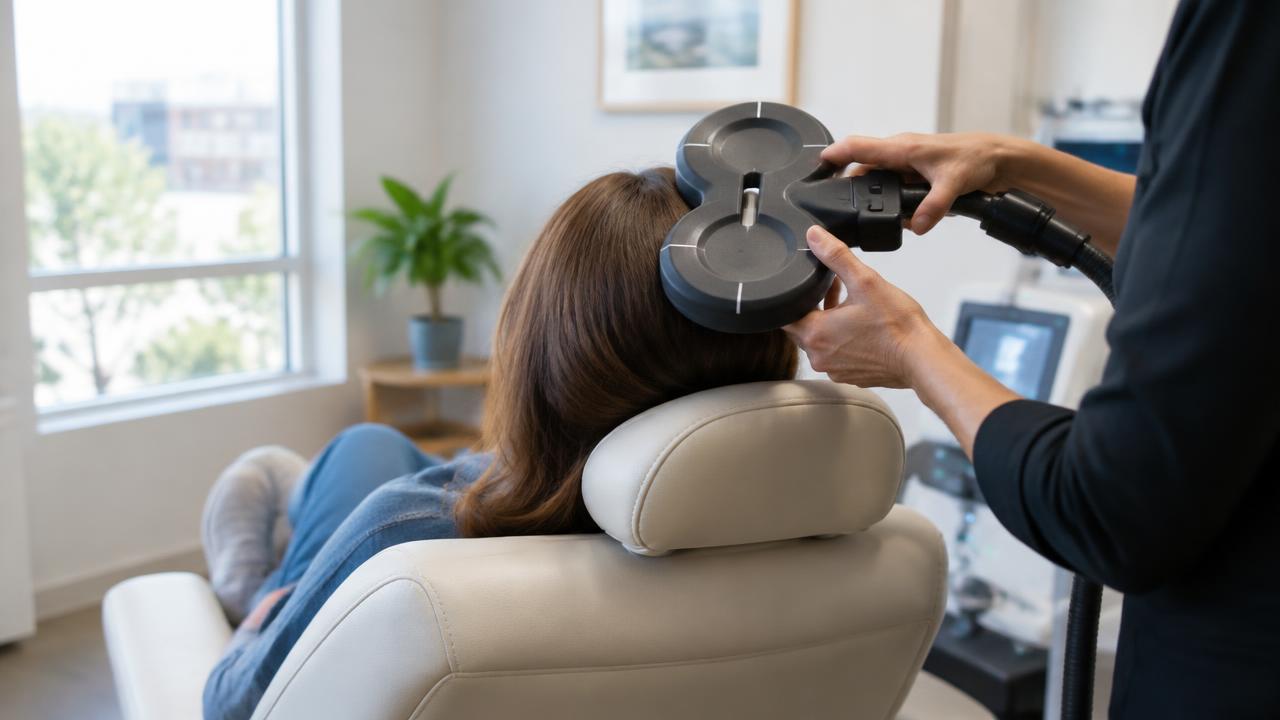
The unfamiliar equipment can make a first transcranial magnetic stimulation appointment sound more intimidating than it is. During routine TMS, you sit in a treatment chair, remain awake, and receive magnetic pulses through a coil positioned near your head. There is no incision and no general anesthesia. The Mayo Clinic patient guide describes it as an outpatient procedure, usually used for depression when other treatments have not worked well enough.
Before the pulses begin
Your team first reviews whether TMS is appropriate and safe for you. Expect questions about your medical history, medications, seizures, previous head injuries, and implanted devices or metal. This is not paperwork to rush through: the magnetic field makes some implants and objects particularly important to identify before treatment.
Bring an up-to-date medication list and information about any implanted device. Mention supplements and recent medication changes, too. Rather than deciding for yourself that an old operation or device is irrelevant, let the clinical team make that assessment. Mayo Clinic specifically recommends discussing metal or implanted medical devices before the procedure.
Why the first appointment is different
The first session generally includes measurements to establish where the coil should sit and how strongly it should stimulate. One step is finding your motor threshold: the team delivers pulses and watches for a small movement, often in a hand or finger. That response helps determine an individualized stimulation dose.
A twitch during this measurement is expected and does not mean something has gone wrong. Ask the clinician to explain each step before it happens if surprises make you anxious. Your first visit may take longer than later appointments because these setup procedures are part of treatment planning.
The sounds and sensations
The coil produces clicking sounds as it delivers pulses. You will wear hearing protection because the sound is loud. At the scalp, stimulation may feel like repetitive tapping or knocking. Nearby muscles may twitch, and some people experience discomfort during the pulses or a headache afterward.
Those sensations are real, but they are not a measure of how much the treatment is helping. Stronger discomfort does not mean a better antidepressant effect. The National Institute of Mental Health's safety overview explains that magnetic stimulation can activate scalp muscles, contributing to discomfort and tension-type headache.
What to say if it feels uncomfortable
Tell the technician promptly rather than trying to endure pain silently. Describe where the discomfort is, whether it happens only during pulses, and whether it changes when your head moves. The clinician can assess coil placement, positioning, and other appropriate adjustments. Do not reposition the coil yourself.
How long will you be there?
There is no single session length for every form of TMS. The NIMH overview of brain stimulation therapies distinguishes conventional repetitive TMS from shorter theta-burst approaches. Appointment time also includes preparation, positioning, and any symptom or safety checks.
Ask for the expected door-to-door time for your specific protocol, not just the minutes when the machine is running. Also ask how often you will attend and how many weeks are planned. Knowing the actual schedule makes it easier to arrange work, childcare, transportation, and other responsibilities.
After the appointment
Because routine TMS does not involve sedation, many people can return to usual activities afterward, including driving. However, a headache, dizziness, or another unexpected symptom deserves attention. Follow the team's instructions and do not drive if you feel unsafe to do so.
You also do not need to feel an immediate mood change for the appointment to have been worthwhile. Treatment is typically assessed across a course rather than judged by the sensations from one session. Ask how the clinic will measure symptoms and when you will review progress with the prescribing clinician.
A useful first-visit checklist
- Bring your medication list and implant information.
- Ask how hearing protection will be fitted.
- Tell staff about pain, unusual symptoms, or changes in your health.
- Confirm the full appointment schedule and follow-up plan.
The goal is an understandable, monitored treatment experience—not a test of how much discomfort you can tolerate.
Sources
- Mayo Clinic: Transcranial magnetic stimulation
- NIMH: Brain stimulation therapies
- NIMH: TMS safety and risk
Clinical note: Talk with a qualified clinician about what to expect from your specific TMS protocol and personal health circumstances.
Frequently Asked Questions
- Are you awake during TMS?
- Yes. Routine outpatient TMS does not require general anesthesia, and you remain awake during treatment.
- Does TMS hurt?
- People may feel tapping, scalp discomfort, or facial muscle twitching. Tell the treatment team if stimulation is painful so they can assess positioning and treatment settings.
- Can you drive after TMS?
- Many people can drive and resume normal activities after routine TMS because it does not require sedation. Follow your clinician's advice if you feel unwell or have other restrictions.
Written by
TMS News Editorial Team
The TMS News editorial team covers transcranial magnetic stimulation research, treatment access, and patient education, drawing on peer-reviewed studies and leading clinical centers.
 PreviousMeasuring TMS Progress: Why Response and Remission Are Different
 NextMotor Threshold in TMS: A Calibration Measure, Not a Depression Score